
English| EUR
Suggested for you
More currencies
Choose a language
Shelly Beach sits inside Cabbage Tree Bay Aquatic Reserve, a protected marine sanctuary where over 160 fish species gather in shallow, accessible waters. The reserve's unique position captures both tropical currents and temperate ecosystems, creating one of Sydney's most biodiverse snorkeling sites. You'll encounter everything from resident gropers to seasonal yellowtail visiting from northern reefs.
Quick answer
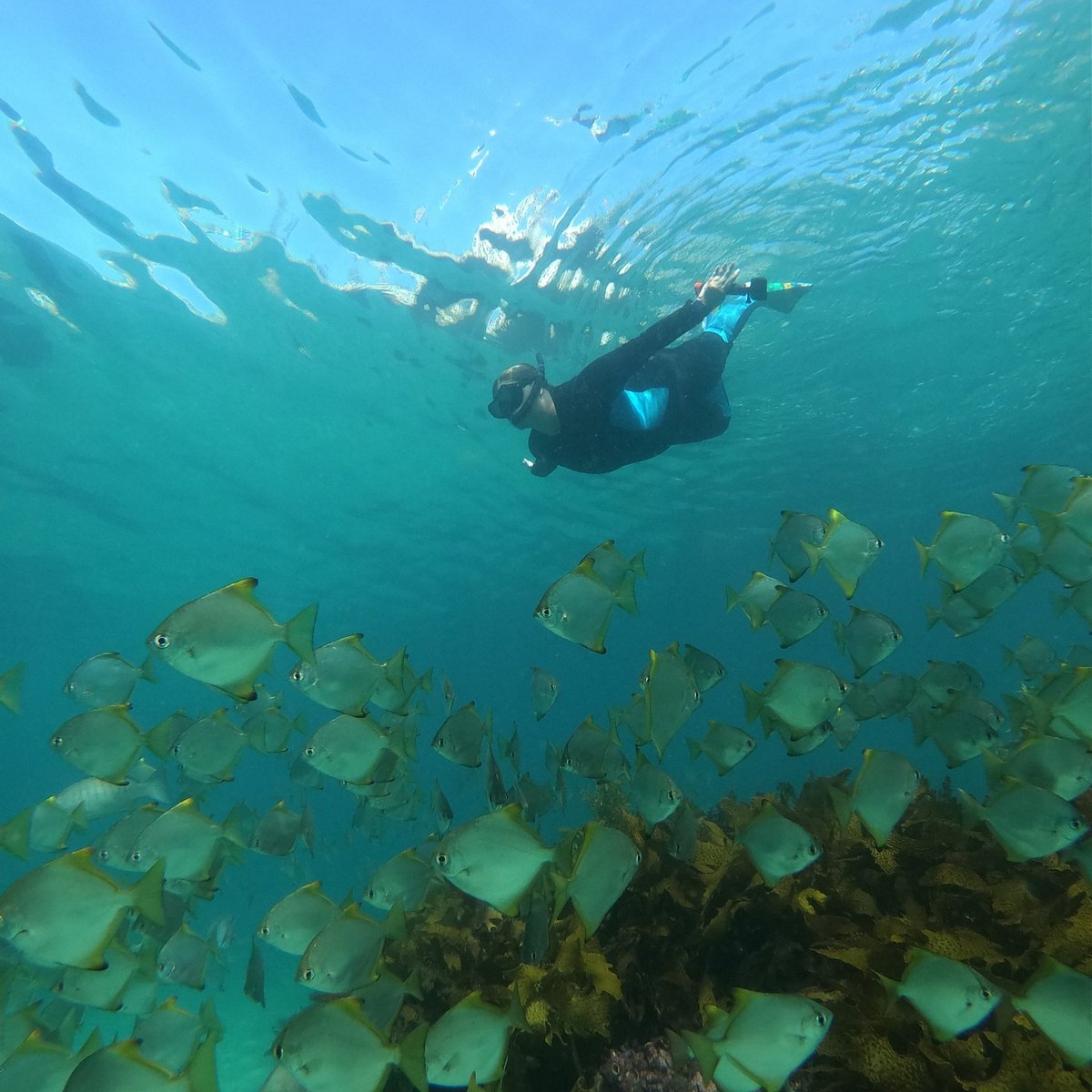
Shelly Beach snorkeling fish include Eastern Blue Gropers, Port Jackson sharks, wobbegong sharks, yellowtail kingfish, luderick, eastern rock blackfish, old wives, and schools of juvenile bream. The Cabbage Tree Bay Aquatic Reserve protects over 160 documented species, with visibility typically ranging from 5 to 15 meters depending on recent weather. Most fish congregate around the rocky ledges and kelp forests along the northern and eastern edges of the bay, accessible within 20 meters of shore.
The Eastern Blue Groper patrols Shelly Beach's kelp beds like a territorial landlord—males can reach 1.2 meters and live beyond 70 years, their cobalt scales unmistakable against the golden kelp. These fish are so site-attached that individual gropers become recognizable to regular snorkelers, returning to the same cleaning stations and feeding zones year after year. Cabbage Tree Bay Aquatic Reserve was established in 1982, making it one of New South Wales' oldest no-take zones. The protection shows. Wobbegong sharks rest under ledges in numbers rarely seen outside reserves, their camouflaged bodies blending into algae-covered rock. Port Jackson sharks arrive each winter to lay spiral egg cases among the kelp holdfasts, then vanish by November. Yellowtail kingfish school in the deeper water beyond the rock platform during summer, their silver flanks catching light as they hunt baitfish pushed against the bay's natural amphitheater. The reserve's northern edge drops to a kelp forest interspersed with sea tulips and sponge gardens. Luderick graze algae here in tight formations. Eastern rock blackfish, dark and territorial, defend crevices in the sandstone shelf. Old wives—striped silver fish with distinctively compressed bodies—dart between rocks in small groups, their common name referencing their supposed resemblance to gossiping figures in old Sydney harbors. Tropical strays arrive with the East Australian Current between January and April. Surgeonfish, parrotfish, and occasionally butterflyfish appear when water temperatures push above 22°C, living briefly outside their usual range before autumn cools the bay. This seasonal overlap between tropical visitors and year-round temperate residents creates identification opportunities found nowhere else along the Sydney coast. The rocky reef structure provides shelter across depth zones from one to eight meters, meaning both confident swimmers and cautious beginners encounter the same species list—just at different proximities to shore.
“Eastern Blue Gropers can live beyond 70 years, with individual fish becoming recognizable fixtures to regular snorkelers.”
The optimal time for observing marine life at Shelly Beach is between 07:00 and 10:00 to avoid congestion. Visiting during the shoulder seasons offers clearer water conditions and more comfortable ambient temperatures for snorkeling.
—
Arrive during the 07:00–10:00 window to ensure easier parking and calm water visibility before activity increases.
Mild 18°C to 24°C
Water temperatures remain warm following summer, providing comfortable conditions for extended snorkeling sessions.
Mild 17°C to 23°C
Spring brings stable conditions and clear visibility as the water begins to warm up before peak summer.
Verdict: The best slot for snorkeling is between 07:00 and 10:00 on weekdays during the months of March, April, October, or November.
Shelly Beach is accessible to the public every day of the week. Visitors are free to access the water at any time.
Shelly Beach is part of the Cabbage Tree Bay Aquatic Reserve, which is a public area accessible to everyone. There are no entrance fees required to access the beach or the water for snorkeling.
Verdict: A typical adult pays 0 AUD for access, as the beach and snorkeling areas remain open to the public without ticket requirements.
Shelly Beach is located at Marine Parade, Manly NSW 2095, Australia. The most common approach is via Manly Beach, followed by a short coastal walk along the Cabbage Tree Bay Aquatic Reserve.
144 or 132 bus to Manly Wharf
F1 Manly Ferry from Circular Quay to Manly Wharf
Drive via Pittwater Road to Manly, parking near Marine Parade
Walk from Manly Beach south along Marine Parade
For the best experience, plan your visit during the best arrival window of 07:00–10:00 to avoid crowds and find easier parking before the beach gets busy.
Shelly Beach sits within the Cabbage Tree Bay Aquatic Reserve, where all marine life is protected by law. Your conduct directly affects the health of this ecosystem and the fish species that inhabit it.
Everything you need to know about shelly beach snorkeling fish
Snorkelers frequently encounter blue groupers, wobbegongs, and schools of yellowtail while observing shelly beach snorkeling fish in their natural habitat. This protected marine reserve is also home to sea urchins, squid, and occasionally sea turtles among the rocky reefs.
Entry to this coastal site is 0 AUD, meaning there is no fee for public access to the water. Visitors can enjoy the environment for free at any time of the week.
The best arrival window is 07:00–10:00 to avoid crowds and find easier parking before the beach gets busy. Early morning visibility is often superior for those tracking shelly beach snorkeling fish in the clear water.
All visitors must respect the Cabbage Tree Bay Aquatic Reserve regulations which prohibit taking any marine life, shells, or rocks. Please remain aware of your surroundings and avoid touching the coral or aquatic inhabitants while pursuing your shelly beach snorkeling fish sightings.
Professional operators provide guided excursions that help you locate diverse underwater species safely. Booking a tour allows you to learn more about the ecosystem from experienced instructors.
The beach features a concrete path for easy walking access down to the shoreline. It is a popular spot for families, though it is best to prepare your gear on the sand before entering the water.